

Developer AI Tools Are Increasing Build Volume
New research from DX, published in June 2026, tracked AI adoption across a sample of engineering organizations and found that most are seeing a 10-15% increase in PR throughput. Those numbers might sound modest compared to the 10x gains you've seen in vendor marketing, but at scale they represent a real and sustained increase in build volume.
What no one’s talking about (yet): every one of those additional pull requests triggers a build. And for teams building iOS or macOS applications, that build has to run on Apple hardware. The bottleneck in the software delivery lifecycle is shifting, and Mac build infrastructure is one of the places where teams are starting to feel it.
AI moved the dev bottleneck from writing code to build pipelines
AI coding tools speed up the part of engineering that involves writing code. But Microsoft research suggests that writing code only accounts for about 14% of the average engineer’s workweek. AI tools are accelerating that 14% meaningfully, but it doesn’t touch the other 86% of the software development process.
With the help of coding agents, developers can produce a higher volume of written code. That means more PRs and more CI triggers. More CI triggers mean more build jobs queued. And that’s where most teams will find their new software development bottleneck. In the build infrastructure that powers their CI/CD.
The DX research cites this as a reason AI productivity gains are lower than expected: automation creates new bottlenecks. Teams reclaim time writing code, then lose it waiting for builds to finish. The net effect is that the time savings AI generates can quietly disappear into queue wait times.
Why build capacity problems are harder for iOS and macOS teams
On most stacks, you can throw more Linux runners at a CI bottleneck. With iOS and macOS builds, you can't. Xcode requires macOS. macOS requires Apple hardware. That's a hard constraint with no workaround.
Scaling Mac build infrastructure requires either acquiring more hardware or getting more out of the hardware you have. Both take planning, and bare metal procurement (especially in 2026) takes time. Teams that relied on a fixed pool of Mac minis can find themselves in a situation where AI tooling has outpaced their infrastructure before they realize it's happened.
The pattern is straightforward: AI adoption increases PR volume, PR volume increases build demand, and build demand hits a ceiling defined by available Mac compute. If you're not actively tracking build queue depth alongside your AI adoption metrics, you may already be past that ceiling.
What increased app build demand looks like in practice
The symptoms tend to show up gradually. Build queue times creep up. Developers start waiting longer for CI feedback on PRs. Pipelines that ran in 45 minutes now consistently run longer. Engineers working across time zones notice that builds kicked off at the end of a workday in one region are still running when the next region comes online.
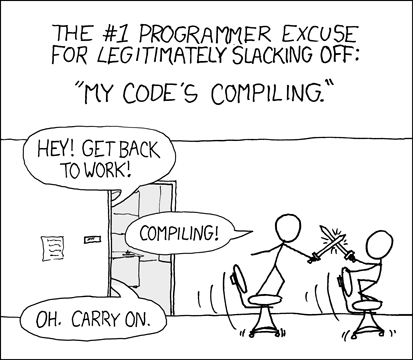
That's the dynamic to watch for. AI tools give developers speed. Saturated build infrastructure takes it back.
Orka scales Mac build capacity without scaling hardware linearly
The most practical answer to variable and increasing build demand is virtualization. Orka, MacStadium's macOS virtualization platform, lets teams run two macOS VMs on each physical Mac, increasing the number of concurrent build agents available from a fixed hardware footprint.
The case studies from teams already running Orka at scale make the throughput impact concrete.
Lloyds Banking Group was running 15 Mac minis on-premises, handling around 100 daily builds. Build times ran 90 minutes. After deploying Orka, build times dropped to 25 minutes, a 3x improvement. VM provisioning went from a week to 30 minutes. Their engineering lead, Daniele Galluccio, noted that the team can now "scale in a matter of days, enabling us to respond swiftly to business needs and market changes." That kind of response time matters when AI tooling is increasing build demand faster than traditional procurement cycles can keep up.
ING deployed 15 dedicated bare metal Macs in MacStadium's Dublin data center, running two Orka VMs each, giving their team 30 dedicated CI agents. Pipeline execution times dropped by 50%. The 60+ iOS engineers on their team, distributed across six countries, went from routing builds through personal machines to running on consistent, fast, shared infrastructure.
Thumbtack cut build times from one hour to 30 minutes by moving to Orka, while also eliminating the network storage bottlenecks that had been slowing parallel jobs on their previous setup. As their iOS software engineer Scott Southerland put it, the move provided "a virtualization platform that will support future Apple OS upgrades" while making their daily Mac DevOps more efficient.
All three teams had build infrastructure that was no longer keeping pace with their mobile app development velocity. Orka gave them capacity headroom without requiring them to double their hardware.
Sizing your Mac infrastructure for the AI era
If your engineering organization is actively adopting AI coding tools, build infrastructure should be on your capacity planning radar alongside those investments. The throughput gains are real, the build demand increase is real, and for iOS and macOS teams, the hardware constraint is real.
The teams seeing sustained velocity gains from AI are the ones that haven't let a slow build pipeline erase the time those tools create.
Want to go deeper on capacity planning? Read or DevOps Capacity Planning Guide here.
Ready to assess your Mac build capacity? Talk to our team about Orka.